
 Recently one of our readers asked us to post an article about the benefits of Windows driven VPS hosting. Since we’ve been looking into provision of this service as well, there was some interesting information gathered and we would like to share this with you. We thought that showing both upsides and downsides of this type of hosting is more fair. Sure, this article is posted from our point of view, so it reviews peculiarities of Windows hosting in terms of use of VPS-hosting specifically as a platform.
How is Windows run on VPS servers?
Running Windows on VPS usually implies the use of two types of virtualization technologies – XEN – the technology, generally applied in creation of fully virtualized VPS platforms and Hyper-V – special virtualization system, developed by Microsoft to run Windows VPS server only. XEN is known to many of our readers – this virtualization technology allows to create and manage virtual servers keeping them completely isolated from each other, while using same hardware resources by different system kernels – each fully virtualized environment keeps the system with its kernel that addresses to the layer of virtualized hardware.
As for Hyper-V – this technology needs some description. In fact, it is a hypervisor that works on the basis of partitioning with at least one parent partition that has access to hardware and can create child partitions that host guest OSs within virtual environment – just like XEN and its interfaces. But if you take a closer look, you can see that Hyper-V is a version of core installation of Windows Server 2008 with virtualization support – which makes it look much like OpenVZ that utilizes modified Linux kernel. Thus, it is fair to call it a symbiosis of two technologies.
What is so special about Windows VPS Hosting?
VPS as a platform to run Windows on has become a real discovery for many users who needed Windows-based hosting but could hardly afford a dedicated server while experiencing issues with shared hosting, run under this OS. Indeed, using Windows as a server OS and namely for hosting needs is quite troublesome – initial resource usage is higher than that under Linux, disk usage policy and work of the disk subsystem is more complex, and full functional access can be achieved only by establishment of remote desktop connection (RDP) or a control panel. The latter aspect caused the biggest inconvenience, since shared hosting users are not usually provided with RDP access while the control panel functionality is limited so, that the lack of privileges makes the use of many tools impossible.
Use of VPS hosting has solved many of those problems – VPS carriers with large amounts of RAM allowed to delegate resources that are enough for the system to operate with additional software and cover the loads created by resource intensive programs (e.g. Microsoft Exchange server); RAID hard disk arrays + virtual disk partitioning allowed to minimize the I/O loads and increase the read/writing speed. Finally, a VPS allowed to create isolated environment, which enabled the users to manage their servers under “Administrator” privileges.
What are the downsides to keep in mind?
Besides the obvious upsides of Windows-based VPS hosting, there are, however, downsides that should be considered while making the choice. First of all the price – when it comes to evaluation of Windows hosting in general and its hosting on a standalone server in particular, all licenses, starting from the OS itself and all software, seem to cost an arm and a leg. The server is not going to be cheap as well – as mentioned above, Windows requires more resources, so the least powerful virtual server you will need is a XEN-based VPS – which are more expensive than those under OpenVZ – with 1 GB of RAM at minimum (you can find plans with 512 MB of RAM offered, but there won’t be much resources left to operate with). A Hyper-V based server with same resource rates will grant you more stable hosting, but it is going to cost more.
Mentioning this downside we don’t mean that the pricing difference is going to reflect in tens of dollars compared to Linux VPS hosting, but this may make some users think, whether they need it – at least those, who are not sure, if they are going to prefer ASP and .NET to PHP. If you are sure about the use of Microsoft software, here are some more tips on what you should be careful about.
Accessibility. You may be happy about having RDP and control panel access to your server – both provide clear intuitive interfaces, the former actually makes you feel like sitting at your home desktop, but are those means actually enough? If your server gets too overloaded, you may not be able to access it to reboot it, so you will need to send a support request which definitely causes a time loss. What you may make sure about before choosing your Windows-driven VPS host, is if they offer remote reboots from the host’s client panel – this may save your time.
Monitoring. Unlike Linux-based VPS servers, those running Windows need more severe monitoring, which may result into either bigger expenses – so you will need to hire an administrator or involve your host’s support team – or stresses, caused by constant inspection of your server’s state and investigation of issues it has or may have in future.
There are even more aspects, related to OS Windows itself to be kept in mind – security, as Windows is quite vulnerable; software-related; usability-related and others. So it is fair to get back to the question, whether you really need it. Many webmasters who are asked to create a site to work on a Windows server usually ask this question. And when they receive a solid “yes” they want the project to be described as clearly as possible. Thus, if you imagine your project well and see the full picture of how it is going to be run and why exactly it needs Windows, you are on the right way, and we hope, that your experience in this is going to be positive.
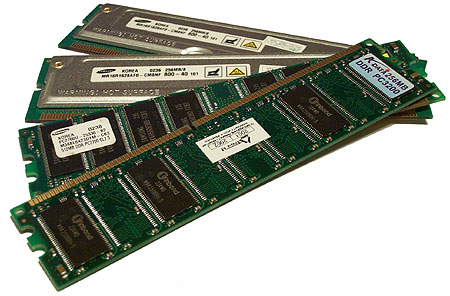 This question is the one many people ask themselves before purchasing their first VPS. Indeed, when you only check out the plans, you cannot tell for sure what intensity of RAM usage you expect. What you know, is the approximate amount of physical memory used by the software you are going to run on your VPS. Software system requirements, however, are usually not enough to estimate the real use of RAM needed for the particular application or script to operate, and thus it is hard to know how much physical memory the entire server with all its background processes in general is going to need.
There are some facts that you know that might help you there. For instance, we know that the server in its basic installation – usually LAMP – requires at least 128 MB of RAM. Choice of the control panel will make you add another 64 MB to your requirements (if your choose WebMin or DirectAdmin) or even 128 MB – if you want to run cPanel. This makes a minimum of 256 MB with a lack of operating options. What you can run there is email and FTP exchange (not intensive though) and hosting of simple websites. Dynamic and script-driven websites, such as CMS will also fit this configuration but you may need to implement many adjustments, some of which can limit the functionality of your online project.
If you look into running something more serious on the Web, you will need to search for a more solid solution. Let us review bigger VPS configurations and estimate what can be hosted there.
512 MB
This is one of the most popular configurations available on the market of VPS hosting. A VPS with 512 MB of RAM usually becomes a step-up for users who have never dealt with VPS servers before and who gave this type service a try on a smaller plan and then requested an upgrade.
If you want to host E-commerce software or run a script that is going to use your server resources constantly – a VPS with 512 MB of RAM is going to suit you perfectly. This plan will also fit those, who look into using a VPS as a platform for hosting reselling – simple shared hosting, of course. WordPress and Magento users will also find such a VPS a better luck, since 256 MB virtual machines never let them run those CMS full-throttle.
1024 MB
A one-Gig VPS is a choice of a Pro. Many gurus and experienced webmasters, as well as resellers and other online business holders, either purchase those servers at once or upgrade to them shortly.
If you deal with hosting reselling, you will find a VPS with 1024 MB RAM to be a perfect solution for serious reseller business. Unlike smaller VPS plans, those and higher let you offer the so-called Master reseller hosting which implies that your resellers will be able to sell hosting, too. And of course, a more powerful VPS will let you manage the clients easier. Indeed, if you have a thousand clients or more, whatever the business you do is, why should you partition them into groups to send emails hourly so as not to overload the server. You deal with e-commerce, so you must have some special offers and discounts and you want to be sure, everyone knows it – a powerful VPS will let you notify everyone at once without overloads or any other issues.
2048 MB
If you need a power of a dedicated server, but do not want to pay extra for the features you do not need, a 2 GB VPS is something you will like.
Those servers are usually the top ones among many VPS hosting providers and thus have the highest privileges on the carrier. This feature will make you feel absolutely comfortably on your VPS and it is worth it. Such a powerful VPS is heaven for big online projects and geeky things – those servers are capable of letting you refuse from standard server configuration, so one can easily install there such popular software as Java, Tomcat webserver, FFMPEG and many other tools, to make their online project a hi-tech multimedia pad.
We hope that this review of the most popular VPS plans helped you find out what you need or may need for your online business. If it did, you may like the news that since recently we run a special offer that has doubled RAM on all our VPS servers, so now our 256 MB, 512 MB and 1024 MB plans come with 512, 1024 and 2048 Megabytes of RAM accordingly.
But if you think VPS is not enough for you, take a look at our cheap Linux dedicated server hosting offers.
 After we have delivered you numerous articles on different aspects of VPS hosting, we’ve noticed that we need to get back to this topic again. Once again we are going to talk about the problem of choice of a VPS server. This time we are going to take a look at this question under a different angle – let us share some interesting tips on how to tell if what you see when checking out the feature/pricing page of your potential VPS host is what you are going to get. While introducing you choice-making tips in our previous articles we usually referred to the technical aspect of VPS hosting, today we are going to analyze the VPS hosting from the point of view of a customer.
How much RAM do you get in fact?
When you see a 1 GB VPS plan at a very low cost, don’t be too fast in making optimistic conclusions. Check if this entire amount is guaranteed RAM. The best option is to contact sales support – then you are going to have a proof – a copy of your chat or email. But if you don’t have time for those checks, there is a quick way to find it out on your own – check the virtualization type used by this host. If it is XEN – be sure the entire 1 GB of RAM is guaranteed. If they use OpenVZ (the hosts that use it often say their VPSes are powered by Virtuozzo), there’s a risk, that their pricing provides the combined amount of RAM – guaranteed + burstable (RAM, that may be allocated only for a short period of time and thus – not constantly available). Since RAM is the main feature of any VPS server, this should one of the first points you verify before moving any further.
CPU units
Checking out pricing of some VPS hosts, one can find such feature as CPU units. This parameter shows the CPU frequency, available for the given VPS. Although it looks rather informative and lets the potential client compare the offered plans in more details, it’s not quite a correct way to represent VPS CPU specifications. To find out how powerful the CPU of the given VPS is, you need to know, what number of cores the entire VPS-carrier has, what their frequency is and how much of this power is delegated to the specific virtual machine – the latter factor depends on performance priority.
If you don’t know, how to interpret this information, you can simply ignore it. If you do need the details, you can have a brief consultation with the sales department of your potential host. This will let you find out the specifications of the carrier. The more powerful it is and the bigger the plan you are looking into, the more powerful your VPS is going to be.
Disk Space
Since VPS servers are usually offered as a fast solution that is cheaper than a dedicated server, those are not designed for large data processing. The minimal plan at some VPS hosts may offer as little as 10 GB of disk space. If you are going to host a few web pages, it’s alright, but if you work with email and databases, you need to consider disk space allocation rather carefully. Now let us count what you have in the end – after your server is setup, the system may take up to 2 GB of disk space. Any backup you make is going to create a file of the size approximately equal to the size of your /home directory. Not that much space left, isn’t it? That is why another Gigabyte of your virtual HDD may become vital. Well, it can also be taken by swap. According to the architecture of OS Linux, swap is a fixed disk partition, not a file, unlike on Windows – therefore, before you order a XEN-based VPS, you need to consult sales department first, to find out whether /swap is counted with the disk space offered or not.
Summary
If you want to be completely sure about your future VPS host, you need to find out as many details as you can before you actually sign-up for their services. Your potential host may not list everything on their web-page, it’s alright, but their sales and technical team should always be able to explain these or those aspects of hosting with their company. If it happens that some of your questions remains unanswered, you have serious reasons to not consider this host. If you are looking for an affordable and reliable VPS host right now, please spend another minute checking out our plans here at SiteValley.com.
A week ago Ubuntu Mini Remix announced their new release of Ubuntu 10.10 livecd. That’s the fourth release of Ubuntu with minimal software set delivered by UMR, who seem to think different of this operating system. Those who consider Ubuntu to be an OS-in-a-box will be surprised by simplicity of its minimized installation medium. But will they actually like it?
We would have never intended to discuss that if we hadn’t installed an Ubuntu-based VPS recently. We at Sitevalley.com do not receive such orders frequently – installing Ubuntu on the server requires many tweaks and disables the use of automating control panels, such as DirectAdmin or cPanel, which means more manual technical work for the customer. Generally, Ubuntu is not actually a true server distro – this OS is known as a perfect desktop solution – however, if the user is good at a certain OS specifically, it’s reasonable to let them work with it…
This very question of reasonability has actually fired up a discussion on whether Ubuntu Mini is going to be in demand. The ideas below are summary of this discussion that we are going to share with you.
The Idea of UMR Read the rest of this entry »
 Starting reseller business five years ago or earlier the business owner had only two options: signup for a shared hosting account with reselling feature or order a dedicated server. The initial option was a fine solution for starters since it was cheap, but as soon as the resellers’ business developed they needed a step-up. The problem however was that a dedicated server was still not affordable for them, while the resource usage of both resellers’ and their resold accounts became completely unbearable for a standard shared servers. This led to continuous suspensions of accounts and constant quarrels, some of which were even brought to social media. Finally, either the hosting company met halfway with the reseller offering some discount on upgrade or the reseller quit the company to signup for another shared hosting plan with another host. A lot has changed since VPS hosting has been introduced, so nowadays hosting reselling is not that tough, expensive and risky business.
What is a VPS and How It Works?
A VPS is a Virtual Private Server – an isolated virtualized environment with its own OS (Operating System) and emulated hardware, hosted on a physical server a.k.a. carrier. Those virtual servers are setup within a carrier by means of virtualization technology, which allows to run several isolated boxes, letting them operate independently from each other and provide the performance rates, similar to the ones of a dedicated server. Though there are several virtualization technologies, the common idea implied in all of them is to create conditions, on which several operating systems could function within single hardware set – one physical machine. There are many backgrounds for such an idea – energy use reduction, hardware use optimization, setup and maintenance cost cutting, etc. The main thing is that this idea works well for many business solutions including hosting reselling – let’s take a closer look, at which aspects specifically.
Reasonable Price Read the rest of this entry »